
WHAT IS THE THREE HAIL MARY NOVENA?
If you’ve never prayed the Three Hail Mary Novena, today is an easy day to begin.
Three Hail Marys. It takes only a few minutes to pray, but this simple and efficacious devotion has been practiced by Catholics for centuries.
Known as the Three Hail Mary Novena, the devotion dates back to the Middle Ages and has been recommended by saints, including St. Anthony of Padua, St. Mechtilde, and St. Alphonsus Liguori.
But these aren’t simply three Hail Marys prayed one after another.
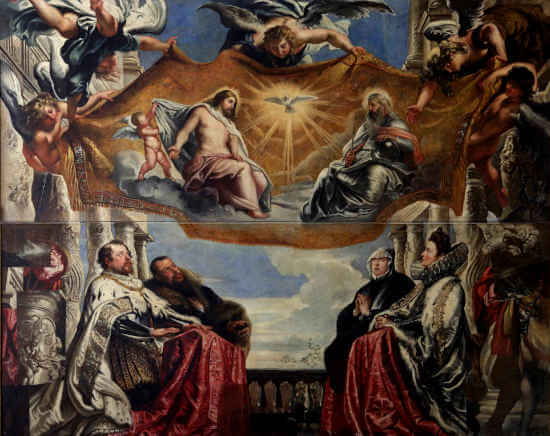
Each is offered in honor of a particular gift God has given the Blessed Mother: power, wisdom, and mercy. These gifts are traditionally associated with the three Persons of the Blessed Trinity.
The first Hail Mary honors the power Mary received from God the Father. We ask her help in overcoming sin and the enemies of our soul, and bring her our particular intention.
The second honors the wisdom given to Mary through God the Son. We ask for humility, knowledge of God’s will, and the strength actually to do it.
The Pieta Prayer Book
Deepen your prayer life with beloved Catholic prayers and devotions you can carry anywhere.
The third honors Mary’s mercy, associated with the Holy Spirit. Here we ask for true sorrow for our sins and Our Lady’s merciful assistance in our present needs.
Each petition is followed by one Hail Mary.
The devotion can be prayed in the morning, before bed, or both. And although it is called a novena, it is traditionally prayed continually rather than only for nine days.
There are seasons when adding another long devotion to the day can seem difficult. Three Hail Marys can become a small but steady habit of turning to the Blessed Mother and asking her help with the things that matter most: resisting sin, knowing God’s will, growing in holiness, and bringing our needs before Him.
If you’ve never prayed the Three Hail Mary Novena, today is an easy day to begin.
Today’s Takeaway
THREE HAIL MARYS, THREE INTENTIONS
Power to resist sin. Wisdom to know God’s will. Mercy when we fall. The Three Hail Mary Novena places these needs in Our Lady’s hands each day.
Live It Out
BEGIN WITH THREE
Pray the Three Hail Mary Novena tonight before going to bed. Choose one particular intention to entrust to Mary’s intercession and continue the devotion each day.
WHICH SAINT GAVE A HOMILY AFTER HE WAS BEHEADED?
Just watch and learn, Headless Horseman, watch and learn.
Few details are available regarding this ancient saint. A great deal of legend surrounds his life, however, so we know that he had a huge impact wherever he went!
Due to the persecutions inflicted by the Emperor Decius, the Catholic Faith had waned in Gaul. Denis, one of seven bishops sent there to revive the Faith, journeyed to what is now the city of Paris. He built a church on the Seine Island and set up the first episcopacy in that beloved city.
Famous Cathedrals Stained Glass Ornament Collection 1 – Set of 6
Our first collection of famous cathedrals is featured in this set.
With the help of two inseparable companions, Denis brought countless souls into union with God.
The pagan priests hated him for it. They eventually incited the governor to arrest Denis and his companions.
The Christian priests held fast to the Faith despite many tortures. Finally, they were beheaded.
Legend has it that Denis picked his own head up off the ground and carried it from Montmartre, the site of his martyrdom, to the future site of the Abbey of St. Denis, preaching a sermon along the way! (What a sight that must have been to the pagan priests!) So now, the eloquent St. Denis is regularly portrayed holding his own head in his hands.
Today’s Takeaway
STAY FAITHFUL TO THE MISSION
St. Denis may have lost his head, but he never lost sight of his mission: to proclaim Christ until his final breath.
Live It Out
SPEAK WITHOUT FEAR
Refuse to let fear silence your faith. Find one natural opportunity to speak of Christ today.
Continue The Journey
Fun fact: St. Denis holds a place (as well as his head) in one of the stunning rose windows of Notre Dame Cathedral. Here at The Catholic Company, we’ve crafted an exclusive set of stunning ornaments featuring the rose center window of Notre Dame, as well as five other iconic cathedral windows of Christendom. These hanging ornaments will be a spectacular addition to your Christmas tree this season and elegant décor all year round. Get yours today at The Catholic Company!
HAVE THE SOULS IN PURGATORY EVER SPOKEN TO THE LIVING?
Sometimes, these souls are permitted to manifest themselves to the living to ask for prayers.
It’s easy to forget about Purgatory and those who dwell there. We don’t see or hear them or the pains they are currently enduring to enter Paradise as pure souls.
But sometimes, these souls are permitted to manifest themselves to the living to ask for prayers, to warn the living of the reality of Purgatory and Hell, and to encourage them to amend their lives.
Holy Souls in Purgatory Rosary
Let each bead remind you to pray for the faithful departed as they journey from purification into the light of Heaven.
Padre Pio was visited by one such soul as he prayed in the oratory of the friary. He heard a noise in the church and, not thinking it to be anything unusual, went on praying. Suddenly, he heard a vroom noise, and the candles on and around the altar came crashing down. Going to the Communion rail, Pio saw the eerie form of a deceased friar. Frightened, Padre Pio yelled out, “What are you doing in the dark?” The friar said that he was in Purgatory, atoning for carelessness with his duties in the church. Padre Pio promised to offer a Mass for him. Later, he asked one of his fellow friars to check behind the altar. They found several broken candles there proof of the friar’s neglect.
On certain occasions, these suffering souls have left us tangible reminders of the dreadful pains of Purgatory, which we, the living, often take far too lightly. At the Museum of Purgatory in the sacristy of the Church of the Sacred Heart of Suffrage in Rome, you can see many of these reminders: burned fingerprints in prayer books; a burned handprint on a table; a hole burned in a nightcap; a copy of a ten-lire note left at a monastery as a stipend by a deceased Italian priest who desired Masses to be said for him.
One of these items is a photocopy of a burned handprint on a nightshirt sleeve. The shirt belonged to a Belgian man who, in 1789, heard frightening, ghostly noises in his house for eleven straight nights. He was then visited by the ghost of his mother, who reminded him of his obligation to have Masses said for her and reproached him for his dissolute life. The man obeyed, founded a pious lay society, and died in sanctity.
Today’s Takeaway
PRAY FOR THE HOLY SOULS
“It is therefore a holy and wholesome thought to pray for the dead, that they may be loosed from sins” (2 Maccabees 12:46). The souls in Purgatory cannot help themselves, but our prayers and sacrifices can assist them on their journey to Heaven.
Live It Out
REMEMBER A FORGOTTEN SOUL
Offer a prayer, sacrifice, or Mass today for a soul in Purgatory who has no one else to pray for them.
WHY WAS OUR LADY OF THE ROSARY ONCE CALLED OUR LADY OF VICTORY?
The Feast of Our Lady of the Rosary reminds us that even the greatest battles can be placed into God’s hands through prayer.
Every October 7, the Church celebrates the Feast of Our Lady of the Rosary. But that was not its original name.
The feast was first called Our Lady of Victory because it commemorated an incredible military victory attributed to Mary’s intercession.
In 1571, the powerful Ottoman navy was advancing across the Mediterranean. Christian Europe was divided, and many feared that its forces could not withstand another attack. Pope St. Pius V worked to unite the Christian nations into the Holy League, but he knew that ships and soldiers would not be enough.
Ten Dates Every Catholic Should Know
A compelling exploration of key moments where divine intervention shaped the Church and the world.
He asked Catholics throughout Europe to pray the Rosary.
While the fleet prepared for battle, ordinary Catholics gathered in churches, monasteries, and homes. On October 7, the Holy League encountered the much-feared Ottoman fleet near Lepanto. After hours of fierce fighting, the Christian fleet won an unexpected and decisive victory.
According to tradition, Pope Pius V learned of the victory before any messenger could have reached Rome. During a meeting, he suddenly rose, went to a window, and announced that the Christian forces had prevailed. Convinced that the victory had been obtained through God’s providence and Mary’s intercession, Pope Pius V established the Feast of Our Lady of Victory.
A few years later, Pope Gregory XIII renamed it the Feast of Our Lady of the Rosary. Now the feast would not bear the name of the battle but the name of the prayer offered by countless ordinary believers!
Most Catholics will never face a naval battle, but everyone faces struggles that seem beyond human strength. A child leaves the Faith. A marriage is strained. A terminal illness is diagnosed. Fear begins to overcome hope.
The Feast of Our Lady of the Rosary reminds us that through prayer, we place our battles into God’s hands. The Rosary draws us into the mysteries of Christ and teaches us to face every struggle with Mary’s faith, courage, and trust.
Today’s Takeaway
REMEMBER THE PRAYER BEHIND THE VICTORY
The feast was renamed for the Rosary so the Church would remember not only the victory, but the prayer that preceded it.
JESUS’ MESSAGE TO FAUSTINA: BAKE SOME BREAD.
Our Lord used this saint to be a messenger of His love in every way.
You may know St. Faustina Kowalska as God’s messenger of Divine Mercy.
Christ spoke to Faustina directly for years. Through visions and conversations, Christ gave St. Faustina the message of Divine Mercy that has changed the world.
But did you know Christ also used St. Faustina for small, humble tasks as well?
Once, while St. Maria Faustina was in the convent kitchen in Vilnius, she heard Jesus speak to her heart with a simple yet challenging request: He asked her to bake bread for the poor.
St. Faustina Prayer Book for the Holy Souls in Purgatory
The St. Faustina Prayer Book for the Holy Souls in Purgatory provides a rich collection of prayers, devotions, and meditations inspired by St. Faustina, the Apostle of Mercy.
Faustina paused, her hands still dusted with flour from the loaves she was already preparing for the sisters. She wasn’t the one in charge of distributing food, and the convent had strict rules about such matters. But the instruction felt clear, so she took a deep breath, set aside her own hesitation, and quietly set to work making extra loaves.
That afternoon, as she carried out her daily tasks, a few unexpected visitors came to the convent—a handful of poor men, looking hungry and weak. Without hesitation, Faustina welcomed them and handed over the bread she’d made. She offered no explanations, understanding that this was simply an act of obedience to Jesus.
Later that evening, her mother superior noticed the missing bread. When she asked Faustina about it, Sister Faustina calmly explained what had happened, mentioning only that Jesus had asked her to do it. To Faustina’s relief, her superior didn’t question her; she only nodded.
Today, on the feast of St. Faustina Kowalska, may we be inspired to listen obediently to the voice of Jesus, remembering that, even if we are not called to receive visions, we are all called to be His messengers of love, just as St. Faustina was.
Today’s Takeaway
SMALL ACTS OF MERCY
St. Faustina shows us that being a messenger of God’s mercy often begins with small, hidden acts of obedience and love.
Live It Out
SERVE QUIETLY
Listen for one simple way Jesus may be asking you to serve someone today, and respond without seeking recognition.
HOW DID THE SAN DAMIANO CRUCIFIX CHANGE WESTERN CIVILIZATION?
Known today as the San Damiano Cross, the original is kept in the Basilica of St. Clare in Assisi.
In the early 1200s, a young Francis of Assisi walked into a small, crumbling church outside the walls of Assisi called San Damiano.
Francis was still trying to understand what God wanted from him. He knelt to pray before a large painted crucifix hanging inside the neglected church.
Then he heard Christ speak to him:
“Francis, go and repair My house which, as you see, is falling into ruin.”
Francis initially took the command literally. San Damiano really was falling apart, so he began rebuilding it. He begged for stones and repaired the little church with his own hands.
Italian San Damiano Crucifix on Octagonal Base
Beautifully crafted according to ancient traditions, this San Damiano Crucifix is perfect for prayer and meditation.
In time, Francis came to understand that his mission was much larger.
The Church itself needed renewal.
Francis embraced a radical life of poverty, prayer, penance, and obedience to the Gospel. Others joined him, and the Franciscan Order was born. Eight centuries later, the influence of the Franciscans can be found throughout the world.
And the crucifix that played such an important part in Francis’ conversion still exists.
Known today as the San Damiano Cross, the original is kept in the Basilica of St. Clare in Assisi. It is an icon cross, filled with figures surrounding Christ. The Blessed Mother, St. John, St. Mary Magdalene, Mary the mother of James, and the centurion stand beside the crucified Christ. Angels appear above, and at the very top is the risen Christ ascending into heaven.
The Christ Francis saw is wounded, but He is not defeated. His eyes are open, and He stands upright on the Cross. His Passion, Resurrection, and Ascension are all represented in the same icon.
Francis knelt before that image seeking God’s will for his life. He received an answer that would require the rest of his life to fulfill.
His first task was simply to pick up a stone and begin.
Eight hundred years later, Christ’s words to Francis still have something to say to us. There will always be something in the Church, our families, and our own souls that needs rebuilding. We can begin with what God has placed in front of us.
Today’s Takeaway
“REPAIR MY HOUSE”
Francis could not have known where Christ’s command would lead when he began repairing San Damiano. He simply responded to what God asked of him, and his obedience eventually touched the entire Church.
Live It Out
PICK UP THE FIRST STONE
What needs some rebuilding in your own life right now? Choose one concrete thing you can do today rather than waiting until you know how the whole project will turn out.
Continue The Journey
St. Francis was known for many things other than the San Damiano Crucifix. One prayer traditionally attributed to St. Francis is the Prayer of St. Francis. This Prayer of St. Francis scented candle features this beloved prayer and makes a serene home accent and thoughtful gift. Purchase yours today at The Catholic Company!
WHY DID ST. FRANCIS CALL DEATH HIS “SISTER”?
800 years after his death, St. Francis’ final moments still offer a powerful lesson in faith, surrender, and hope.
Near the end of his life, Francis added these words to his famous Canticle of the Creatures:
“Praised be You, my Lord, through our Sister Bodily Death, from whom no one living can escape.”
At the time, Francis knew his own death was approaching. He was very ill, nearly blind, and suffering from the wounds of the stigmata.
On October 3, 1226, Francis asked to be brought to the Portiuncula, the little chapel outside Assisi that had played such an important role in his life. His brother friars gathered around him, and he asked them to sing the Canticle of the Creatures. The account of the Last Supper from the Gospel of John was read aloud.
That evening, Francis died.
Franciscans still gather each October 3 to remember his passing in an observance called the Transitus, a Latin word meaning “passage” or “crossing.”
Ghirelli St. Francis Transitus Rosary in Gold or Silver
Created for the 800th anniversary of St. Francis of Assisi’s passing, this handcrafted Ghirelli rosary features unique 3D devotional imagery.
This year marks the 800th anniversary of that night. Pope Leo XIV has proclaimed a special Year of St. Francis, from January 10, 2026, through January 10, 2027, and the Church is offering the opportunity to receive a plenary indulgence during this anniversary year.
To commemorate the anniversary, Ghirelli created the St. Francis Transitus Rosary, available in gold or silver. Its centerpiece depicts the Transitus of St. Francis, recalling the final passage of the saint who spent his life trying to follow Christ completely.
Francis knew that “Sister Bodily Death” would eventually come for him, just as she comes for each of us. His confidence came from knowing where that passage led.
Today’s Takeaway
“OUR SISTER BODILY DEATH”
“Praised be You, my Lord, through our Sister Bodily Death, from whom no one living can escape.” Francis knew death was unavoidable, but he also knew it was not the end.
Live It Out
PRAY FOR A HOLY DEATH
Ask God today for the grace to remain close to Him throughout your life and, when the time comes, to entrust your final passage completely to Him.
WHAT SAINT HAD AN ADVENTURE AT THE COLOSSEUM?
What did St. Therese do at this famous site during her pilgrimage to Rome?
St. Therese Martin and her sisters grew up in a home atmosphere of deep devotion to Our Lord and His saints. Devotions, penances, and pilgrimages were important to them. The following is a sweet story that highlights St. Therese’s character and honors her before her feast day tomorrow!
Shortly before Therese entered Carmel, the Martin family made a pilgrimage to Rome. (This was the same trip on which Therese cast herself at the feet of an astonished Pope Leo XIII to ask permission to enter Carmel!)
During their Rome pilgrimage, Therese’s group made a visit to the Colosseum. Therese and her sister Celine were thrilled. They wanted to kneel and pray on the sand that had received the blood of so many holy martyrs.
St. Therese of Lisieux Family Icon
Our St. Therese of Lisieux Family Icon depicts the Martin parents surrounded by Therese and her sisters, a beautiful reminder of the family in which the Little Flower’s faith first took root.
However…when they entered the famous, hallowed building, they found that the main portion of the arena was roped off.
That didn’t stop the two Martin girls! The group followed their guide around the public areas while Therese and Celine slipped under the ropes and ran into the arena.
Kneeling on the arena floor, they prayed to the holy martyrs, gathered some gravel as relics, and ran back to their father. No one else had noticed their brief disappearance, but St. Louis probably gave his daughters a loving, piercing look!
Today’s Takeaway
A SAINT WITH SOME SPUNK
“Unless you turn and become like children, you will never enter the kingdom of heaven” (Matthew 18:3, RSV-CE). Therese’s eagerness to get close to the martyrs shows something of the childlike enthusiasm and wholeheartedness she would carry into her love for God.
Live It Out
TRUST GOD COMPLETELY
Today, ask St. Therese to help you grow in the childlike confidence in God that became the heart of her Little Way.
HOW DID ROMAN COLLARS BECOME THE PRIESTLY UNIFORM?
We all recognize priests by this special vesture. But where did it come from?
Priests began wearing the standard cassock about three or four hundred years before the iconic collar. In the interim, collars changed according to the times.
Then, in 1624, the Church concluded that the time had come for clerical garb to have stricter guidelines.
Why 1624? Well, collars had grown into major fashion statements by that time. No matter how plain or embellished the rest of the garb, the collar was the crown of it all. Linen was the most common material, but the high class could display impressive, filigree collars of lace. The fancier the collar, the wealthier the owner!
Today’s Roman Collar
The Church, however, wished both the clergy and laity to always remember what a priest is: Christ’s representative on earth, who is consecrated to God, and who embraces material poverty as did Our Lord. For a priest to wear collars of expensive materials was incongruous with this aspect of his calling. So Pope Urban VIII forbade ornamentation or lace and the Church regulated the fashionable collars to simple ones.
Today, we are familiar with the most common form of this simple collar: the “Roman collar,” with its simple white square.
Today’s Takeaway
“A COLLAR WITH A PURPOSE”
“They are not of the world, even as I am not of the world” (John 17:16, RSV-CE). The simple Roman collar visibly sets a priest apart for his service to Christ and His Church.
Live It Out
PRAY FOR YOUR PRIEST
Offer a prayer today for your parish priest, asking God to strengthen him in his vocation and ministry.
Continue The Journey
As Catholics, the priestly collar has become a fond image we associate with our beloved priests who help us spiritually. Pass along this fondness for the priesthood with the Priest Black Tumbler Mug.
This fun, faith-filled bib is the perfect Baptism and Christmas gift. Available today from The Catholic Company!
WHAT IS THE BATTLE CRY OF ST. MICHAEL?
We know the St. Michael Prayer. But do you know the battle cry traditionally associated with the great Archangel?
We know the St. Michael Prayer. But do you know the battle cry traditionally associated with the great Archangel?
“Who is like unto God?”
It is more than a battle cry. It is the meaning of Michael’s name.
Sacred Scripture describes the great battle in heaven:
“Now war arose in heaven, Michael and his angels fighting against the dragon; and the dragon and his angels fought, but they were defeated.”
Revelation 12:7-8, RSV-CE
Christian tradition associates St. Michael’s very name with his response to Satan’s rebellion: Quis ut Deus? “Who is like God?”
It sounds like a question, but it isn’t really asking for an answer.
No one is like God.
Satan’s rebellion was rooted in pride, the desire to reject God’s authority. Michael’s name proclaims the opposite. God alone is God. No creature, however powerful, can take His place.
That makes St. Michael’s battle cry surprisingly relevant to our own spiritual battles.
Every time we place our own will above God’s, allow something created to become more important than its Creator, or begin believing that we can manage perfectly well without Him, Michael’s question brings us back to the truth:
Who is like God? No one.
Centuries later, Pope Leo XIII composed the prayer Catholics still know so well:
“Saint Michael the Archangel, defend us in battle, be our protection against the wickedness and snares of the devil…”
Although the St. Michael Prayer ceased to be universally required after Low Mass in the 1960s, St. John Paul II urged Catholics in 1994 not to forget it and encouraged the faithful to continue praying it.
September 29, the Feast of the Archangels Michael, Gabriel, and Raphael, is a good day to bring it back into your own daily prayers.
Because St. Michael’s ancient battle cry still gives us the right answer whenever pride, temptation, or fear tries to convince us otherwise:
Quis ut Deus? Who is like God?
Catholics have long called upon St. Michael for protection, but he is not the only heavenly protector whose intercession the Church has treasured. The St. Benedict Medal is another beloved Catholic sacramental traditionally associated with protection against evil.
Today’s Takeaway
“WHO IS LIKE GOD?”
St. Michael’s name contains the answer to the pride at the heart of every spiritual rebellion: no one is like God. “Quis ut Deus?” is a short prayer worth remembering whenever something else begins taking God’s rightful place.
Live It Out
LEARN THE BATTLE CRY
The next time you face temptation, fear, or the desire to have things entirely your own way, pray “Quis ut Deus? Who is like God?” Then follow it with the St. Michael Prayer.
4 SAINTS TO HELP YOU WITH HOLY HOSPITALITY
Hosting season is upon us. These saints get it.
Throughout the Gospels, we see Christ entering homes, sitting at tables with all sorts of people, sharing meals, and teaching those gathered around Him. The early Christians followed His example, gathering in homes to pray, break bread, and share their faith. That instinct to open our doors and make room for others has been part of Christian life from the beginning.
But let’s be honest: hosting doesn’t always feel particularly holy. It can feel more like a juggling act of grocery runs, vacuuming, setting the table, and hoping the casserole actually cooks through. The stress is real, and sometimes it can overshadow the very joy that brought people through our door in the first place.
Which is why it helps to look to the saints—men and women who lived hospitality in both big and small ways, and who show us that welcoming others doesn’t have to be perfect to be holy.
Let’s take a look:
St. Martha – For when you’re feeling frustrated.
We all know Martha. She’s the one in the Gospel who’s scrambling to set the table while her sister Mary sits peacefully at Jesus’ feet. She gets frustrated, but who wouldn’t? Hosting is work. But Martha also had the courage to proclaim her faith out loud: “Yes, Lord, I believe.” When you’re tempted to grumble about being the only one wiping down counters, ask St. Martha to help you host with humility.
St. Zita – For the tired homemaker.
Zita was a servant in Italy who did all the behind-the-scenes work without fanfare. She’s the patron saint of domestic workers, which makes her a natural companion for anyone running the kitchen like a command center. She didn’t complain, didn’t demand thanks—she just did her work well, with kindness. Ask her for a little of that quiet steadiness when your guests are eating faster than you can refill the breadbasket.
St. Elizabeth of Hungary – For an increase of generosity.
Elizabeth had royal wealth, but what made her unforgettable was the way she used it. She fed the hungry, gave her best to the poor, and turned her castle into a place of refuge. Hosting can sometimes feel like performance—matching napkins, polished silver—but Elizabeth reminds us that all that is for naught if one isn’t giving with real generosity of heart. If your food isn’t fancy or your living room isn’t picture-perfect, it doesn’t matter as long as you’re generous in your love.
St. Pier Giorgio Frassati: For the more casual host.
Not every host is a meticulous planner. Some are more like Pier Giorgio—who loved bringing people together, hiking, and sharing meals. Rather than formal dinner parties or events, St. Pier Giorgio would create spur-of-the-moment gatherings and intimate moments with those who happened to be around him. If you feel pressured to host like Martha Stewart, Pier Giorgio says: relax. Genuine friendship and the intention to share the beatitudes matter far more than a planned tablescape and a 4-course meal.
As Catholics, we must remember that hosting isn’t about perfection. It’s about presence. These saints lived ordinary hospitality with extraordinary love.
WHY DID PADRE PIO REMEMBER HIS CHILDHOOD SO FONDLY?
Poverty was no hindrance to holiness or happiness during Padre Pio’s childhood in the countryside near Naples.
Poverty was the norm in southern Italy at the end of the 19th century. While the north was becoming more modern and industrialized, the south—the Mezzogiorno—remained an agricultural society. Most people were poor, landless farmworkers.
Orazio and Giuseppa Forgione and their family, like so many others in the town of Pietrelcina in the Campania region, were impoverished. They were slightly better off than some, since they owned and farmed their own tiny bit of land rather than working someone else’s. The children of the town went to school at night—for the mere three years of public school available in Pietrelcina—so they could assist their parents with work during the day. Though illiterate themselves, the Forgiones provided for their children’s education as best they could.
Padre Pio Laughter Keepsake Box
Inspired by Padre Pio’s joyful spirit, this elegant keepsake box offers a special place for treasured rosaries, jewelry, or meaningful reminders of God’s blessings.
Orazio and Giuseppa were deeply pious and instilled in their children a great love for Our Lord, the Madonna, and the saints. The Forgiones went to church daily and prayed the Rosary together every evening. Their neighbors sometimes called them the “God-is-Everything Family.”
Padre Pio as a young Franciscan
They owned a few modest stone buildings at 27–28 Vico Storto Valle in the Castle District—so named because it had developed around the old castle. They also had a cottage near their little farm, which was situated outside town in an area called the Piana Romana. In the winter, they would travel out to the fields from town; in the summer, they would reside at the cottage.
It was a poor life but a happy one, and when little Francesco Forgione grew up and became Padre Pio, he looked back on it fondly. On summer nights, his family would congregate with the neighbors, singing together in the moonlight and eating macaroni. Padre Pio later said that he and his siblings “roamed as little kings in a kingdom without confines, whose only law was that of the Good Creation.”
He loved the Piana Romana so much that, when he contracted an infection as a child and was thought to be near death, he asked to be taken there so he could see it one more time.
Today’s Takeaway
“LITTLE KINGS IN A KINGDOM WITHOUT CONFINES”
Padre Pio grew up with very little, yet remembered roaming the countryside with his siblings as “little kings in a kingdom without confines.” His childhood is a reminder that the richness of a life isn’t always measured by what a family possesses.
6 DISTRACTIONS THAT MAY BE KEEPING YOU FROM GOD
Sometimes the noisiest place is our own mind. We replay conversations, anticipate problems, mentally write tomorrow’s to-do list, or worry about things we cannot control.
You want to pray more. Be more present to your family. Read Scripture. Spend less time rushing from one thing to the next.
So why is it so hard?
Sometimes the problem isn’t a lack of good intentions. It’s distraction.
In the Good Catholic series, Finding Simplicity, an important difference is identified between distractions we can’t control and those we can prevent or minimize. The latter can quietly fragment our attention until we find ourselves with very little left for God or the people right in front of us.
Here are six worth looking for in your own life:
1. Your phone
How often do you pick it up without even thinking? A text leads to email, which leads to social media, which leads somewhere else entirely. Try leaving your phone in another room during prayer, meals, or the first 30 minutes after you wake up. If you use the phone for prayer, open the Morning Offering, Liturgy of the Hours, or the Mass readings you came for, but don’t let a notification turn prayer time into distracted phone time.
2. Noise
Noise is constant. To truly experience silence, we need to be intentional. In The Power of Silence – Against the Dictatorship of Noise. Silence is a daily necessity, and the lack of it can easily become a source of distraction for our souls.
Holiness Isn’t for the Rare Few. It’s for You.
Sainthood can feel like a distant, impossible goal — something reserved for the rare few. But what if holiness is actually within reach? “Becoming a Saint,” a free online course from Christendom College, offers a clear, practical path rooted in Catholic tradition which bridges the gap between your ideals and the way you actually live. No cost. No pressure. Just a real way to start living what you were created for.
We can gain a bit of silence in easy ways. Turn off music on the commute to school or work. Sit in silence and say a quick prayer before calling that friend. Go for a walk in the early morning or in the evening and postpone that podcast for a few minutes of quiet. Adoration of the Blessed Sacrament is a wonderful place to find that silent time with God. Allow some moments each day with no noise.
3. News and entertainment
There is nothing inherently wrong with knowing what’s happening in the world or enjoying a show. But constant input leaves very little room for silence. Putting a limit on the news and entertainment you consume is one way to stay accountable to yourself. Ask yourself how often you consume something simply because it has become a habit. Skip some form of news or entertainment and use that time for spiritual reading.
4. Clutter
There is an order to God’s creation, and bringing a little order to our own surroundings can help quiet some of the noise around us. Take that pile of clothes you’ve walked past three times today. Where do they belong? In the laundry? In a drawer? Put them there. The pile of paper on the counter and the overflowing closet keep reminding us of unfinished tasks and competing for our attention. Choose one small space and put it in order.
5. Unnecessary busyness
Some activity is unavoidable. Some we choose. We say yes, add another commitment, run another errand, or fill an open evening simply because it’s open. Before adding something to your calendar, ask: Does this need to be done? Does it need to be done by me? Then take a look at what is already there. Is there one commitment, errand, or activity you could eliminate? Creating a little margin in your calendar leaves more room for the unexpected ways God may ask for your time.
6. Your own thoughts
Sometimes the noisiest place is our own mind. We replay conversations, anticipate problems, mentally write tomorrow’s to-do list, or worry about things we cannot control. Remember that we are the gatekeepers of our thoughts. When our mind wanders, we can gently bring it back. Even the act of bringing our minds back to God is in itself a kind of prayer. Arrow prayers, such as “My God and My all” can also help.
There are endless short ejaculations we can lift up to God in a moment to try to regain focus on Our Lord.
The goal isn’t to construct a perfectly distraction-free life. That’s impossible. It is to recognize the distractions we are allowing to take more of our attention than they deserve. Jesus said:
“But seek first his kingdom and his righteousness.” (Matthew 6:33, RSV-CE)
THE SAINT WHO FLEW—AND HELPS WITH TESTS!
Meet St. Joseph Cupertino! They call him the patron of pilots and for good reason.
Giuseppe really didn’t have any skills. He was considered exceedingly dull as a child, and seemed incapable of learning anything. He performed poorly in school, couldn’t seem to keep his focus on the simplest things, and failed at apprenticeships as a teenager. He would “space out” frequently and even wander off at times.
When he tried to join the Capuchin Franciscans in the hopes of finding his place in the world, he was accepted for a time. Then they sent him away because of his lack of ability to do…anything. In addition to his apparent unintelligence, the bouts of distraction continued, wherein he was seemingly whisked away by some pious thought while he was supposed to be occupied with a practical task.
He tried again with a different community of Franciscans as a servant, and things began to improve. The Franciscans noticed how humble Giuseppe was, how full of joy, how simple; indeed, he was what a model Franciscan should be. He was readmitted to the Order, and began studies for the priesthood.
But study was still his weakness, and he found himself unable to learn what he needed to know. There was only one Scripture passage he could talk about: Luke 11:27, “Blessed is the womb that bore you.” When it came time for his diaconate test, his prospects looked grim—but as God would have it, he was asked during his exam to speak on exactly that passage, and speak he did! A deacon he became, and eventually a priest—and is now known as the patron saint of test-takers.
Hail Mary Prayer Tracing Dry-Erase Board & Marker
This colorful Hail Mary dry-erase board helps kids learn their Catholic prayers while practicing handwriting.
Giuseppe’s episodes of abstraction continued, and with immense fervor. He would be lost for long periods of time in contemplation at the beauty of God, completely taken away from this world to the other. It appeared that his trademark absent-mindedness was something far deeper than that. He had an incredible connection to God, who chose to reveal Himself in ways that made Giuseppe lose himself in wonder.
The flying friar, St. Joseph of Cupertino! Painting by Ludovico Mazzanti.
And did we mention that he flew? Levitation was a normal part of this mystical friar’s life. He would fly across the chapel; when he heard the names of Jesus and Mary; at the refectory table; outside when in awe at the beauty of creation, et cetera. He is now also known as the patron of aviators!
Though Giuseppe was beloved by the poor he served, his mystical experiences did not always gain him the favor of his brethren. He was reported to the Inquisition for his unusual behavior. Although they found nothing against him, he was eventually put into seclusion, never really returning to normal life. He spent twenty-five years this way, accepting everything with resignation and patience. He died on September 18th, 1663.
Today’s Takeaway
“GOD SEES WHAT OTHERS MISS”
St. Joseph of Cupertino seemed to have little to offer by the world’s standards. His life reminds us that God sees gifts and possibilities in us that neither we nor anyone else may recognize.
Live It Out
BRING HIM YOUR WEAKNESS
Think of one limitation or weakness that frustrates you. Instead of wishing it away today, offer it to God and ask Him to show you how He can work through it.
EMBER DAYS PART 2: THE CATHOLIC WAY TO WELCOME A NEW SEASON
Ember Days were also closely connected with the priesthood. Beginning in the early Church, ordinations were traditionally celebrated on Ember Saturdays.
There was a time when Catholics didn’t simply notice the changing seasons; they prayed their way through them. The Ember Days are an ancient Church tradition dating back at least to the early centuries of Christianity. Four times each year, Catholics observed a Wednesday, Friday, and Saturday with prayer, fasting, and abstinence.
The purpose was beautifully simple: thank God for the gifts of creation, ask His help in using them well, and remember those in need.
The September Ember Days traditionally arrive near the beginning of fall. In 2026, they fall on September 16, 18, and 19, making St. Hildegard’s September 17 feast a particularly fitting bridge between them.
A Catholic Gardener’s Spiritual Almanac
This interesting book blends gardening and spirituality, offering monthly meditations, scripture reflections, liturgical insights, and inspiring saint stories.
For people whose lives revolved around planting and harvest, these days made obvious sense. But they make just as much sense for us. We may no longer depend personally upon the harvest outside our window, but we still depend entirely upon God.
Ember Days were also closely connected with the priesthood. Beginning in the early Church, ordinations were traditionally celebrated on Ember Saturdays. That makes these days a particularly good time to pray for priests and vocations.
The old obligation to observe Ember Days is no longer binding, but Catholics are certainly free to recover their spirit. It doesn’t require an elaborate plan. Fast from something. Eat more simply. Give to someone in need. Pray for your priest. Thank God for the food on your table.
Today’s Takeaway
“TO EVERYTHING THERE IS A SEASON, AND A TIME TO EVERY PURPOSE UNDER THE HEAVEN”
Ember Days remind us that the changing seasons are more than markers of time; they can become occasions for renewed dependence upon God.
Live It Out
KEEP AN EMBER DAY
Choose one September Ember Day for a small fast or sacrifice and offer it for a priest or vocation. End the day by thanking God for one gift of creation you usually take for granted.
EMBER DAYS (PART 1) AND ST. HILDEGARD’S SECRET TO A SIMPLER LIFE
St. Hildegard’s feast on September 17 falls right in the midst of this year’s September Ember Days.
St. Hildegard of Bingen lived almost a thousand years ago, yet her way of seeing the world is also timely.
Hildegard, whose feast we celebrate on September 17, was a Benedictine abbess, theologian, composer, writer, and Doctor of the Church. She also paid extraordinary attention to creation. She wrote about plants, food, healing, music, and the relationship between body and soul.
St. Hildegard Honeycomb Rosary
Inspired by St. Hildegard’s symbolism of bees and the sweetness of God’s Word, this honey-themed rosary features pietersite, petrified wood, and warm copper tones.
One of her favorite ideas was viriditas, often translated as the “greening power” of God.
For Hildegard, this was not nature worship. She saw the vitality of creation as a sign of God’s life-giving presence: in a sprouting seed, a healing herb, and even a soul flourishing in grace.
Many people today are drawn toward simpler living, gardening, natural foods, homesteading, and a life less dominated by screens. And yet St. Hildegard reminds us that simplicity is not about moving to the country or making our own bread. Those things might help us live more simply, but ultimately it is about ordering our lives toward God.
And the Church has long given us a way to do exactly that through the seasons.
Hildegard looked at the natural world and saw something that should lead us back to its Creator. The Church does something similar with Ember Days. Four times a year, as one season gives way to another, she invites us to stop, give thanks to God for the fruits of the earth, practice penance, and remember that everything we receive ultimately comes from Him.
In this way, the Church doesn’t simply tell us to appreciate creation, she teaches us to sanctify our relationship with it.
That may be part of the simpler life many are longing for. Not simply more time outdoors or fewer digital distractions, but a life in which we notice God’s gifts, receive them gratefully, and allow even the changing seasons to turn our attention back to Him.
St. Hildegard’s feast on September 17 falls right in the midst of this year’s September Ember Days. Tomorrow, we’ll look at this nearly forgotten Catholic tradition and how we can recover it
Today’s Takeaway
“SEE THE CREATOR IN CREATION”
St. Hildegard reminds us that the created world is not something to worship, but something to receive with wonder and gratitude because it continually points us back to God.
WHAT DOES A HOME BLESSING ACTUALLY DO?
What actually happens when a Catholic home is blessed? Discover what the Church asks God to do for the home and everyone who lives there.
So much actually happens inside a home. People eat and sleep. Husbands and wives live out much of their marriage there. Children grow up. Birthdays are celebrated there. Difficult news is shared there. Illness is experienced there. Important decisions are made there. Arguments happen there. Forgiveness too. And prayers are said there.
So when the Church blesses a home, she asks God’s favor upon the place where all of that living will take place.
A home blessing isn’t meant to guarantee that nothing painful will ever cross the threshold. It asks that the home become a place where Christian life can flourish: where there is peace, virtue, gratitude, obedience to God, and ultimately holiness.
Christ entered ordinary human life. And Catholic sacramentals continually bring us back to the reality that our kitchens, bedrooms, front doors, dinner tables, and family rooms belong to Him too.
Theology Of Home – Finding the Eternal in the Everyday
Christ entered ordinary human life.
The Church’s prayers ask for God’s protection and invoke Christ’s authority over evil. Home blessings are also meant to protect us. Holy water has long been used in the blessing of homes. St. Teresa of Avila famously wrote of holy water:
“From long experience I have learned that there is nothing like holy water to put devils to flight and prevent them from coming back again.”
The St. Benedict Medal has also traditionally been placed in homes. The medal contains prayers centered upon the Cross of Christ and the rejection of evil, including the famous inscription Crux sacra sit mihi lux: “May the Holy Cross be my light.”
Discover the collection of home blessing items at The Catholic Company.
The purpose of using a blessed St. Benedict Medal in the home is to invoke God’s blessing and protection, particularly through the intercession of St. Benedict, who fought the devil in his lifetime and so is called upon for intercessory help.
The Medal of St. Benedict is based on this tradition of the saint’s power over the wiles of the Devil. To understand why this medal carries such spiritual weight, read about why the St. Benedict medal is considered so powerful.
It also becomes what might be called a “silent prayer,” like a crucifix or statue, continually reminding those who see it to whom the home belongs. Again, none of this should be understood superstitiously. A blessed medal is not a spiritual security system, and holy water isn’t a magic potion. As Fr. Dan Reehil says, “It all goes back to faith. If you don’t have any faith, these things aren’t going to work.”
Learn from Fr. Reehil’s advice on everyday spiritual warfare.
You can bless your own home at any time. The popular time is the Feast of the Epiphany, when families can follow the beautiful tradition of blessing the home and marking the doorway with blessed chalk:
20 + C + M + B + 26
The letters traditionally recall Caspar, Melchior, and Balthasar, the names given to the three Magi. They also stand for the Latin Christus mansionem benedicat: “May Christ bless this house.”
You can also use a prayer book to find a home blessing.
But having a priest formally bless your home is encouraged as well. The Catechism explains that while laypeople may preside at certain blessings, the more a blessing concerns the Church’s sacramental life, the more its administration belongs to ordained ministry.
So if you’ve never had your home blessed, call your parish and ask! It doesn’t have to be a new house. You can have your home blessed at any time. You are simply asking God to bless the place where He has put you.
Prayer should be a regular part of life in a home. Even something as simple as lighting a candle can become an occasion to stop and pray for the people who live beneath our roof.
Today’s Takeaway
“WHERE LIFE HAPPENS.”
Blessing our homes is one way of inviting God into the ordinary places where so much of our life, and our path to holiness, unfolds.
WHAT HAPPENED TO THE TWO MEN WHO SHARED CHRIST’S CROSS?
Simon of Cyrene and the Good Thief shared in Christ’s suffering on Calvary. What can their encounters with the Cross teach us about our own?
On September 14, we celebrate the Feast of the Exaltation of the Holy Cross. We know that the Cross changed the world. But have you ever thought about what happened to the men who actually shared in Christ’s suffering that day?
Simon of Cyrene hadn’t planned to carry Jesus’ Cross.
He was passing by when the soldiers seized him and “laid on him the cross, to carry it behind Jesus” (Luke 23:26). Suddenly, Simon found himself walking behind a condemned man, carrying the very wood upon which Christ would die.
Scripture doesn’t tell us what Simon thought or whether that encounter led to his conversion. It does leave us wondering what happened after that walk to Calvary. Simon did not seek out the cross. It was thrust upon him, much as the crosses in our own lives often are. Yet in carrying Christ’s Cross, Simon was brought into an intimacy with His suffering that he would likely not have chosen for himself.
Life of Christ Icon Cross – 7.3″
The Life of Christ Icon Cross, made in Italy, features a unique quatrefoil design with brilliantly colored scenes from Jesus’ life, including Christ Pantocrator at the center.
Then there was another man who shared Christ’s suffering even more literally.
The Good Thief was crucified beside Jesus. Unlike Simon, he deserved his sentence, and he admitted it. Yet as he suffered beside Christ, his heart was converted, and he said:
“Jesus, remember me when you come into your kingdom” (Luke 23:42).
And from the Cross came the answer: “Truly, I say to you, today you will be with me in Paradise” (Luke 23:43).
The Good Thief could do nothing to change his past. He couldn’t climb down from his cross and begin again. He could only turn toward Christ from the cross he was already carrying.
This is a powerful image as we contemplate the Feast of the Exaltation of the Holy Cross.
We don’t often choose our crosses. Simon didn’t. But sometimes we create them through our own choices, as the Good Thief had.
But whatever crosses we bear, and we will bear them, we can make them an opportunity to unite with the suffering Christ, and this changes everything.
Today’s Takeaway
“STAY CLOSE TO THE CROSS”
Simon and the Good Thief remind us that a cross we never wanted can become the very place where we encounter Christ most closely.
WHAT IS THE “SWORD OF ST. MICHAEL”?
Besides being the fatal instrument that the archangel uses against the devil…
…the “Sword of St. Michael” is an invisible line that links seven of the world’s most significant sites dedicated to him.
The line begins in Ireland and stretches all the way to Israel. It’s an incredibly straight, tidy line and measures somewhere in the neighborhood of 3,000 miles.
St. Michael Bronze Finish Statue
This elegant St. Michael statue captures the strength and power of St. Michael the Archangel, making it a perfect addition to any home or office.
Let’s take a quick tour of its holy sites.
1. County Kerry, Ireland – Skellig Michael. Yes, this is the Irish island you see in Star Wars: The Last Jedi. The real Jedi (i.e. contemplative Irish monks) established their habitation here in the 6th century.
2. Cornwall, UK – St. Michael’s Mount. The holy Anglo-Saxon King St. Edward the Confessor gave this place on the tail-tip of Cornwall to the monks of Mont Saint-Michel Abbey in Normandy, who sent a band to establish the new community. Like the French original, it is regularly cut off from the mainland by tides.
3. Normandy, France – Mont-Saint-Michel. Speaking of the French original, that’s our next stop! According to legend, St. Michael instructed a local bishop to build a monastery on this rocky mount in the 8th century. Today, 3 million people visit this instantly-recognizable site every year.
Mont-Saint-Michel, France
4. Turin, Italy – Sacra di San Michele. A stop for pilgrims on their way to stop #5, this shrine was founded about the year 1000 A.D. by the Benedictines in the breathtaking Italian Alps. (Their website has some incredible videos and images! https://sacradisanmichele.com/)
5. Monte Sant’Angelo, Italy – Sanctuary of St. Michael. This famous shrine is located underground, in a cave where the Archangel appeared in the 5th century—his earliest appearance in the western world. Revered by saints, popes, and countless pilgrims through the ages, it is located close to San Giovanni Rotondo, whose great saint—Padre Pio—was among its devotees.
6. Panormitis, Greece – Monastery of Taxiarchis Mihail Panormitis (“Michael the Commander of the Bodiless Armies”). Located on the island of Symi, this sanctuary was founded in the 5th century and contains a giant (two meters high!) icon of the saint. They say this icon was moved several times but always miraculously came back to its original location.
7. Mount Carmel, Israel – Stella Maris Monastery. The Carmelite Order began on Mount Carmel in the 13th century, but prayer warriors resided there long before that. It has been a holy place since biblical times (Elijah performed his famous contest with the pagan priests here back in the 9th century B.C. See 1 Kings 18:20-40). It does not have a sanctuary specifically dedicated to St. Michael, but its profound sanctity, holy history, and connection to Elijah (another great warrior of God, who is represented by a flaming sword in the Carmelite coat of arms) make it a fitting finale to this transcontinental pilgrimage.
Can you imagine visiting ALL SEVEN in a row? Now that would be one epic journey! They really should have an award for that. Do you think you could do it?
Today’s Takeaway
“REMEMBER WHO FIGHTS WITH US”
The “Sword of St. Michael” stretches across thousands of miles, a striking reminder of a devotion that has crossed centuries and cultures, and of the powerful archangel Christians have long called upon for protection in spiritual battle.
Amazing new evidence for Christ’s Tomb found exactly where Christians said it was!
Archaeological discoveries beneath the Church of the Holy Sepulchre reveal cultivated land and rock-cut tombs remarkably consistent with St. John’s account of Christ’s burial place.
For centuries, Christians have traveled to Jerusalem to kneel before the tomb of Jesus Christ in the Church of the Holy Sepulchre.
Now archaeologists have spent several years digging beneath the ancient church. And what they have found is remarkably similar to what St. John described nearly 2,000 years ago.
The Gospel tells us:
“Now in the place where he was crucified there was a garden, and in the garden a new tomb where no one had ever been laid.” (John 19:41, RSV-CE)
According to archaeologists from Sapienza University of Rome, the area beneath the Holy Sepulchre was originally a stone quarry. As portions of the quarry fell out of use, some areas were filled with soil and cultivated, while tombs were cut into the rock nearby.
In a Newsweek article from August 28, 2026:
“Archaeologists found evidence of an ancient burial ground and cultivated landscape beneath Jerusalem’s Church of the Holy Sepulchre, the excavation’s leader said, potentially strengthening the site’s connection to biblical accounts of Jesus Christ’s burial.”
In other words, before the magnificent church stood there, there were cultivated fields and rock-cut tombs, a landscape remarkably similar to the garden and tomb St. John describes.
Prof. Francesca Romana Stasolla, the archaeologist leading the excavations, made the connection herself in a 2025 interview with The Times of Israel:
“The Gospel mentions a green area between the Calvary and the tomb, and we identified these cultivated fields.”
Stasolla has been careful to distinguish between what archaeology can establish and what belongs to faith. But it is no doubt remarkable where all of this evidence is being found.
Christians didn’t wait for modern archaeologists to tell them where to look.
The Church of the Holy Sepulchre has stood on this site since the fourth century, when Emperor Constantine built a great Christian complex around the locations already identified with Christ’s Crucifixion and burial. Constantine’s builders isolated the particular rock-cut tomb that was being venerated as Christ’s tomb from other burials around it.
And now, some 1,700 years later, archaeologists have been able to investigate what lies beneath the floors of that ancient church.
The archaeologists have found a former quarry. Cultivated ground. Rock-cut tombs. And a landscape that fits with St. John’s description of the place where Christ was crucified and buried.
Perhaps just as fascinating is what the excavation tells us about the generations of Christians who came before us.
“The real treasure we are revealing is the history of the people who made this site what it is by expressing their faith here,” Stasolla told The Times of Israel in April 2025.
She also made the following observation:
“Whether someone believes or not in the historicity of the Holy Sepulchre, the fact that generations of people did is objective.”
This isn’t the first time archaeology has supported a tradition that Christians have held for centuries.
In the twentieth century, archaeologists dug beneath St. Peter’s Basilica in Rome, another place where Christian tradition had preserved the memory of a burial for centuries. Beneath the church, they discovered an ancient Roman necropolis and evidence surrounding the traditional burial place of St. Peter.
Then there is St. Paul.
At the Basilica of St. Paul Outside the Walls, archaeologists uncovered a large marble sarcophagus beneath the papal altar, in the place ancient Christian tradition had long identified as the Apostle’s tomb. When tiny fragments of bone from inside the sarcophagus were carbon-dated, they were found to belong to someone who lived in the first or second century A.D.
Pope Benedict XVI announced the results in 2009, saying that they “would seem to confirm the unanimous and undisputed tradition” that these were the mortal remains of St. Paul.
And now we have another remarkable archaeological chapter beneath the Church of the Holy Sepulchre.
For centuries, Christians have called this place holy because they believed that here Christ was crucified, laid in the tomb, and rose again. As researchers uncover the ancient landscape beneath the church, what they are finding continues to fit the place the Gospels describe.
In the end, the name says it best. This truly is holy ground. Not because of what archaeologists have found beneath it, but because of what Christians have believed happened here nearly 2,000 years ago:
Christ was laid in a tomb. And on the third day, He left it empty.
The Fisherman’s Tomb: The True Story of the Vatican’s Secret Search tells the extraordinary story of the secret excavations beneath St. Peter’s Basilica and the search for the Apostle’s remains. Discover more about this amazing story in your own copy from The Catholic Company today!
7 surprising ways your guardian angel can help you
Perhaps the most remarkable thing about this list is how it helps us to recognize how often we probably underutilize the help God has given us.
Most of us probably learned the Guardian Angel Prayer as children. We may still pray it today. But how often do we actually ask our guardian angel for help with the ordinary circumstances of our lives?
The Church teaches that from infancy to death, human life is surrounded by the angels’ watchful care and intercession. Our guardian angels are not simply there to protect us from physical danger. Their concern is ultimately for something much greater: helping us get to heaven.
In our Good Catholic series Angels and the Supernatural, we looked at seven ways Catholic spiritual writers have traditionally described the help of our guardian angels. Some may surprise you.
1. They protect us from dangers to body and soul.
We often think of guardian angels protecting us from accidents, but their care extends to our souls as well. They can help us recognize and avoid situations that might lead us into sin.
2. They help us fight temptation.
St. John Bosco gave wonderfully practical advice: “When tempted, invoke your angel.” Rather than trying to fight temptation entirely on our own, we can immediately ask our guardian angel for assistance.
3. They encourage us toward what is good.
Guardian angels can inspire holy thoughts and encourage us toward prayer, charity, and virtue. St. John Vianney said, “The Angels take great pleasure in helping us with our enterprises, when they are in accordance with God’s will.”
4. They can help us recognize spiritual danger.
That uncomfortable interior nudge telling us to leave a situation, reconsider a choice, or turn away from something harmful shouldn’t always be ignored. Our guardian angels desire our holiness and can help alert us to dangers to our souls.
They can even help us prepare for Confession. Fr. John Horgan, author of His Angels at Our Side, suggests asking our guardian angels to assist us in our examination of conscience.
5. They pray with us and for us.
Our guardian angel can be a wonderful prayer companion. St. Augustine taught that the angels pray for us, interceding that we might receive God’s mercy and grace. When prayer is difficult or we’re carrying a particularly heavy cross, we can ask our angel to pray alongside us.
6. They assist us at the hour of death.
Our guardian angel’s mission doesn’t end when life becomes difficult or frightening. Catholic tradition speaks particularly of the angel’s assistance at the hour of death, when we most need spiritual protection and help.
7. Their care can continue even after death.
Catholic spiritual tradition also speaks beautifully of guardian angels consoling souls in Purgatory and accompanying them until they enter heaven.
Perhaps the most remarkable thing about this list is how it helps us to recognize how often we probably underutilize the help God has given us.
Our guardian angels already watch over us according to the mission God has entrusted to them. But because they respect our freedom, we can also intentionally invite their assistance. We can ask for help resisting a temptation, making a difficult decision, examining our conscience, praying well, or simply getting through an ordinary day faithfully.
And we can thank our guardian angels, too! Have you thanked yours lately?
You can learn more about the help of your guardian angels and about all of these heavenly creatures created by God in our Good Catholic series, Angels and the Supernatural.
The Personalized Guardian Angel Plaque is a particularly fitting reminder of that reality for a child’s room. Personalized with a child’s name, it makes visible something we can easily forget: God has entrusted each of us to the care of a heavenly guardian. Purchase one today at The Catholic Company!
Why is the Green Scapular a special means of Our Lady to rescue souls?
It’s a sacramental for those in need of conversion or healing.
Our Lady knows how hard we pray for our loved ones who have left the Faith. She knows how much we suffer alongside our friends and family who are dealing with physical or emotional afflictions.
She also knows that people in need of conversion are often closed to our attempts to lead them to the truth.
In 1840, she brought us a simple and powerful devotion to her Immaculate Heart, a devotion designed for such difficult (and delicate) situations.
On the Feast of her Nativity, September 8th, 1840, she appeared to Sister Justine Bisqueyburu in Paris. Sister Justine was a Daughter of Charity, the same order as St. Catherine Labouré who had received the Miraculous Medal just ten years earlier.
Our Lady appeared with her Immaculate Heart in her right hand and a scapular in her left. The scapular was really a cloth medallion rather than a true scapular, since it only had one piece of cloth. It depicted Our Lady on one side—her flaming Heart in her hands—and on the other, her Heart, pierced and flaming, rays coming forth from it, and a cross surmounting it. Around her Heart are the words:
“Immaculate Heart of Mary, pray for us, now and at the hour of our death.”
An interior voice told Sister Justine that God wished to establish in the world a greater and more tender devotion to the Immaculate Heart. Graces of conversion would abound for those who were devoted to her under this title and using the image Sister Justine saw.
Since it is not a form of a religious habit like other scapulars, there is no enrollment process—it needs only to be blessed by a priest. The person needing healing or conversion should wear it and say the above-quoted prayer to the Immaculate Heart every day.
Our Lady also explained that if the person in need is unable or unwilling to wear it, you can slip it—unbeknownst to them—into their belongings or home or work environment! (A wise Mother indeed!)
If (as in the case of someone unwilling to wear it) the intended wearer cannot or will not say the prayer, you can pray it for them.
Since the apparition, the Green Scapular has become famous for the conversions and healings Our Lady has effected through it. Some of the most common types of miracles associated with it include: healings of people on the brink of death or suicide, sudden wisdom and understanding in the midst of dangerous relationships or behaviors, and, most importantly, quiet or drastic changes of heart which lead people to (or back to) the Catholic Church.
If you have a friend or family member in need of spiritual conversion, enlightenment, or any kind of healing, place them in the safe haven of the Immaculate Heart of Mary. The Green Scapular is Our Lady’s special means of rescuing these souls—even when they don’t want to be rescued. This pack of 20 is available today at The Catholic Company!
What is St. Teresa’s Bookmark?
Discover the beautiful story behind St. Teresa’s Bookmark and its timeless reminder that, amid life’s uncertainties, God alone suffices.
It sounds like the name of a holy card or something you might tuck into your Bible.
But “St. Teresa’s Bookmark” is actually one of the most beloved little prayers in the Catholic tradition, and the story behind its name is wonderfully simple.
After St. Teresa of Ávila died in 1582, there is a story that a short poem written in her own hand was found tucked inside her breviary, the prayer book she used each day. That is how the words eventually became known as “St. Teresa’s Bookmark.”
You may recognize them:
“Let nothing disturb you;
nothing frighten you.
All things are passing.
God never changes.
Patience obtains all things.
Nothing is wanting to him who possesses God.
God alone suffices.”
It is remarkably short for a prayer that says so much.
St. Teresa lived during a tumultuous period in the Church. She also knew suffering personally. She endured serious illness, difficulties surrounding her reform of the Carmelite Order, criticism, opposition, and the ordinary struggles of the spiritual life.
Yet the words she apparently kept close at hand were very simple: everything else passes. But God doesn’t.
Her prayer has remained a beloved one. When something frightens us or life feels particularly unsettled, we tend to focus on the thing that is changing. St. Teresa turns our attention instead toward the One who never changes.
“God alone suffices.”
And apparently St. Teresa needed to remind herself of that, too.
These words were kept in her prayer book, and five centuries later, we put holy cards in our missals, Scripture verses on our desks, medals around our necks, and little reminders of the faith in the ordinary places where we will encounter them throughout the day.
Our Little Flower Lip Balm is inspired by another Carmelite, St. Thérèse of Lisieux, who centuries after Teresa, would teach her own wonderfully simple way of trusting God. Available in rose or peppermint, it’s a small everyday item that can offer its own little reminder of the Carmelite spirituality both saints lived so beautifully: trust God in the ordinary moments of life. Find yours today at The Catholic Company!
What did St. John Bosco see in Hell?
St. John Bosco’s dream can remind us not to ignore those quiet invitations God places before us every day…
God wants us to know that hell is real, even if we are frightened by the idea of it. For many souls, fear of God is the first step to loving Him with all their heart. This is why, in addition to His warnings in Scripture, God has permitted many holy men and women to experience hell and to record these experiences for future generations.
St. Teresa of Avila, St. Faustina Kowalska, Sr. Lucia of Fatima, and others have left us remarkable accounts of what they experienced. But one particularly vivid description comes from St. John Bosco, who was shown hell in a dream.
Don Bosco spent his life ministering to vulnerable and troubled boys, many of whom were in danger of falling into crime and serious sin. It seems his frightening dream was not given to satisfy curiosity about hell. It gave him something he could use to warn the young souls God had entrusted to his care.
Many concerned the young men God had entrusted to his care. But one of the most disturbing took him somewhere none of us would ever want to go.
Hell.
Don Bosco spent his life ministering to vulnerable and troubled boys, many of whom were in danger of falling into crime and serious sin. In one famous dream, God permitted him to see the terrible consequences of souls continually rejecting His grace.
Bosco described crossing the threshold of an enormous cavern:
“As soon as I crossed [hell’s] threshold, I felt an indescribable terror and dared not take another step.”
He saw an immense cave filled with a terrible fire. Then he watched as boys began hurtling into it.
Horrified, Bosco asked his guide:
“When these boys come dashing into this cave, don’t they know where they are going?”
The answer may be the most important part of the entire dream:
“They surely do. They have been warned a thousand times, but they still choose to rush into the fire because they do not detest sin and are loath to forsake it. Furthermore, they despise and reject God’s incessant, merciful invitations to do penance.”
Notice those last words: God’s incessant, merciful invitations.
It’s easy to read St. John Bosco’s dream and come away frightened by the fire. But perhaps we should be more struck by the invitations.
God had not abandoned these souls. He had called them again and again.
So why doesn’t God just show all of us hell?
If seeing hell would scare us into changing our lives, why doesn’t God simply show everyone what St. John Bosco saw?
Our Lord gave St. Bridget of Sweden a remarkable answer:
“I could also open up hell so that everyone may see its torments, but this would not be justice, since all men would then serve me out of fear, when they should serve me out of love.”
—The Revelations of Saint Bridget of Sweden
God warns us about hell because he gave us free will. Jesus Himself spoke about hell. The Church certainly doesn’t pretend it isn’t real. But God doesn’t want a relationship with us based solely upon terror.
He wants our love.
St. John puts it beautifully:
“Perfect love casts out fear.”
—1 John 4:18
That is the part of Don Bosco’s frightening dream that we should remember. Hell wasn’t chasing those boys. God was chasing them.
He was warning them, calling them to repentance, offering grace, sending people such as Don Bosco into their lives, and giving them opportunities to turn around.
They remained free to say no. And so do we. But we are also free to say yes.
St. John Bosco’s dream can remind us not to ignore those quiet invitations God places before us every day: go to Confession, forgive someone, turn away from a particular sin, pray when we’d rather scroll, make the sacrifice, begin again. (Discover other mystics’ visions of Hell in the Good Catholic series, The Four Last Things.)
St. John Bosco’s vision reminds us that the spiritual battle is real. But it shouldn’t leave us frightened or preoccupied with the devil. It should make us more determined to stay close to Christ.
And we should make use of the spiritual weapons the Church has given us. The Gunmetal St. Benedict Paracord Rosary brings together two powerful Catholic sacramentals: the Rosary and the St. Benedict Medal. It is also a sturdy rosary made to be carried, used, and, most importantly, prayed. Discover yours today at The Catholic Company!
Why does the same suffering make one person bitter and another holy?
Venerable Fulton Sheen concludes with a powerful observation: “every sickbed, every hardship, and every cross we carry is, in a sense, on one side of Calvary or the other”.
The two thieves crucified beside Jesus had something in common. Both were guilty. Both were suffering. And both looked upon the face of Christ.
Yet only one turned their suffering into a path towards Christ.
As the Church prepares to celebrate the beatification of Venerable Fulton Sheen this September, it’s worth revisiting one of his most profound insights. He saw in the two thieves not merely two historical figures, but two possible responses to every cross we carry.
Archbishop Fulton Sheen reflected that the difference between the two men was not the amount of pain they endured. It was what they allowed their suffering to do to their hearts.
The thief on the left became bitter. He demanded that Jesus rescue him from the cross, but never recognized who hung beside him. His suffering became an occasion for anger.
The thief on the right saw something different.
As Fulton Sheen writes, “If pain had no reason, Jesus would not have embraced it. If the Cross had no purpose, Jesus would not have climbed it.” (The Cries of Jesus from the Cross).
The Good Thief understood that suffering united to Christ could become redemptive. Instead of asking to be taken down from the cross, he entrusted himself to the One hanging beside him.
Jesus’ response is one of the most consoling promises in all of Scripture:
“Today you will be with me in Paradise.” (Luke 23:43)
Sheen concludes with a powerful observation: “every sickbed, every hardship, and every cross we carry is, in a sense, on one side of Calvary or the other”. We can allow suffering to make us bitter, or we can unite it to Christ and allow Him to transform it.
None of us seeks suffering. But when it inevitably comes, the Good Thief reminds us that we are never carrying our cross alone.
A crucifix is a powerful reminder of this truth. Our Italian Hand-Painted Crucifix beautifully depicts the sacrifice through which Christ transformed suffering into the path to eternal life. Displayed in your home, it gently reminds us that every cross finds its meaning in His. Find yours today at The Catholic Company!
What did St. Therese consider a mortification?
St. Thérèse reminds us that holiness grows through small sacrifices and quiet acts of love.
The word mortification can sound intimidating.
It can bring to mind saints fasting for days, sleeping on hard floors, or practicing severe penances. But St. Thérèse of Lisieux had a much simpler approach.
She once explained:
“When I speak of mortification, I don’t mean the kind of penance practiced by saints…There are great souls who practice every sort of mortification from childhood, but I am not like any of them. All I did was to break my self-will, check a hasty reply, and do little kindnesses without making a fuss about them—and lots of similar things.”
That’s a very different kind of mortification, and sometimes a more challenging one.
Holding back the irritated response. Doing something for someone when we’d rather not. Giving up our preference without announcing that we’ve done it. Performing a kindness and resisting the desire to be noticed for it.
These aren’t extraordinary acts. In fact, most people around us will never know we’ve done them. And that was precisely the point of St. Thérèse’s “Little Way.” She understood that holiness doesn’t necessarily require doing great things. It requires surrendering ourselves to God in the little things He places before us.
She explained it beautifully:
“Holiness is not a matter of any one particular method of spirituality: it is a disposition of the heart that makes us small and humble within the arms of God, aware of our weaknesses, but almost rashly confident in His Fatherly goodness.”
St. Thérèse quotations excerpted from Mornings with Saint Thérèse.
Thérèse knew her weaknesses. She wasn’t pretending they weren’t there. But instead of allowing them to discourage her, they made her depend even more completely on God.
That’s what makes her Little Way so encouraging. We don’t have to wait until we’re stronger, more disciplined, or somehow more “holy” to begin. The opportunities are already in front of us—in our marriages, our families, our workplaces, and probably within the first hour after we wake up!
St. Thérèse reminds us that we don’t have to wait for an extraordinary opportunity to become holy. We can begin with the next small thing.
Our Small Things Gingham Love Water Bottle carries that same reminder into everyday life. Inspired by St. Thérèse’s spirituality of doing small things with great love, it’s a simple reminder that even the most ordinary moments can be offered to God. Find yours today at The Catholic Company!
St. Thérèse quotations excerpted from Mornings with Saint Thérèse.
Why did Catholics start counting Hail Marys?
Long before the Rosary took its present form, monks prayed the 150 Psalms. Christians who could not read the Psalter began using repeated prayers instead, sometimes counting them with stones, knotted cords, or beads.
It might feel as though the Rosary has always been part of Catholic life. But it actually developed over centuries, and the story of how we came to pray those familiar beads helps explain what the Rosary is really meant to do.
At its heart, the Rosary is not simply a series of prayers to Mary. It is a way of contemplating the life of Jesus with His Mother.
And its beginnings take us back hundreds of years.
1. The Rosary grew out of an ancient practice of praying the Psalms
Long before the Rosary took its present form, monks prayed the 150 Psalms. Christians who could not read the Psalter began using repeated prayers instead, sometimes counting them with stones, knotted cords, or beads.
There’s even a little piece of history hidden in the word itself: our English word “bead” comes from the Old English bede, meaning “prayer.”
Eventually, 150 Hail Marys came to be known as Mary’s Psalter, echoing the 150 Psalms.
2. Tradition particularly connects the Rosary with St. Dominic
In the thirteenth century, St. Dominic was preaching against the Cathar or Albigensian heresy in southern France.
Catharism attacked some of the most fundamental truths of Christianity. Because its adherents considered material creation evil, they rejected the Incarnation and Christ’s true humanity, along with the significance of Mary’s motherhood.
According to the tradition recounted by St. Louis de Montfort in The Secret of the Rosary, Our Lady appeared to St. Dominic and instructed him to preach her Psalter of Hail Marys and Our Fathers.
De Montfort writes of what followed:
“In a very short time a great improvement was seen in the town; people began leading Christian lives and gave up their former bad habits.”
There is something particularly fitting about the Rosary becoming a weapon against a heresy that denied the goodness of the Incarnation.
Again and again, the Hail Mary returned Christians to the extraordinary truth:
God really became man.
3. Much of the Hail Mary comes straight from Scripture
This sometimes surprises people.
When we say:
“Hail, full of grace, the Lord is with thee…”
we are repeating the words of the Angel Gabriel at the Annunciation (Luke 1:28).
And when we continue:
“Blessed art thou among women, and blessed is the fruit of thy womb…”
we repeat St. Elizabeth’s words at the Visitation (Luke 1:42).
The familiar second half, beginning “Holy Mary, Mother of God, pray for us sinners,” developed later.
Venerable Fulton Sheen offered a particularly interesting insight into the words “now and at the hour of our death.” He connected their development with the devastation of the Black Death, when, as he put it, “the present moment and death were almost one.”
Imagine praying those words while disease swept through medieval Europe.
They probably sounded very different.
4. The Our Father puts Christ’s own prayer into every decade
Every decade begins with the prayer Jesus Himself taught His disciples.
Pope Benedict XVI explained that in teaching us the Our Father, Jesus does more than give us words to recite:
“He leads us into the interior dialogue of triune love.”
—Pope Benedict XVI, Jesus of Nazareth
So within each decade, we have Christ’s own prayer followed by the Scriptural words surrounding His Incarnation.
The Rosary is profoundly Christ-centered.
5. The Rosary we pray today took centuries to develop
The Rosary didn’t appear all at once in precisely the form we know today.
The Glory Be, an ancient Trinitarian doxology used by monks after praying the Psalms, eventually became part of each decade. The second half of the Hail Mary developed over time. Later still came devotional additions such as the Fatima Prayer.
And in 2002, Pope St. John Paul II proposed the five Luminous Mysteries, giving us additional mysteries from Christ’s public ministry to contemplate.
Yet the purpose has remained remarkably consistent.
As our fingers move across the beads and our lips repeat familiar prayers, our minds are meant to be contemplating Christ: His Incarnation, His ministry, His Passion, His Resurrection and glory.
Perhaps that’s why the Rosary has remained such a powerful Catholic prayer. Its repetition isn’t meant to be empty. It gives the mind and heart room to linger over the mysteries of Christ’s life.
St. Padre Pio famously called the Rosary:
“My weapon.”
And Pope Benedict XVI described it as a “spiritual weapon in the battle against evil.”
The Rose-Scented Red Wood Rosary offers a beautiful sensory reminder of the prayer traditionally associated with a “crown of roses” offered to Our Lady. With the gentle fragrance of roses accompanying the familiar movement from bead to bead, it can help draw us back to the real purpose of the Rosary: contemplating Jesus with Mary and allowing the mysteries of His life to take deeper root in our own. Purchase yours today at The Catholic Company!
Did Catholics add seven books to the Bible?
Long before there was a Catholic-Protestant debate about the Bible, Greek-speaking Jews were using a Greek translation of the Old Testament known as the Septuagint.
If you’ve ever compared a Catholic Bible with a Protestant Bible, you’ve probably noticed something.
The Catholic Bible has 73 books. Most Protestant Bibles have 66.
So who changed it?
Catholics are sometimes accused of adding seven Old Testament books to Scripture. But a look at Christian history tells a different story.
Long before there was a Catholic-Protestant debate about the Bible, Greek-speaking Jews were using a Greek translation of the Old Testament known as the Septuagint. It included the books Catholics know today as Tobit, Judith, Wisdom, Sirach, Baruch, and 1 and 2 Maccabees.
The writers of the New Testament overwhelmingly used the Septuagint.
In fact, the New Testament contains hundreds of quotations from or references corresponding to the Septuagint wording. There are even apparent allusions to the books later rejected by Protestants. Hebrews 11:35, for example, describes faithful people who were tortured and refused release in hope of “a better resurrection,” closely resembling the martyrdom account in 2 Maccabees 7.
So these books weren’t suddenly discovered by Catholics in the Middle Ages. They were already part of the Scriptures being read by early Christians.
By the fourth century, Church councils were formally listing the books Christians recognized as Scripture. The Council of Rome in 382 listed the books of the Catholic canon, followed by the Councils of Hippo in 393 and Carthage in 397.
That means Christians were recognizing these books as Scripture more than a thousand years before the Protestant Reformation.
So where did the 66-book Bible come from?
During the Reformation, Martin Luther questioned the seven Old Testament books and placed them in a separate section of his German Bible. Among his objections were passages supporting doctrines he rejected. One particularly important example is 2 Maccabees 12:44-46, which speaks approvingly of prayers offered for the dead.
Eventually, most Protestant Bibles omitted these books altogether.
The Catholic Church responded at the Council of Trent in 1546 by solemnly reaffirming the canon it had received and used for centuries.
So when someone asks, “Did Catholics add books to the Bible?”, the historical question worth asking is actually the reverse:
If these books were being read by Christians from the earliest centuries, when did Christians stop including them?
The answer comes much later than many people realize.
The Bible didn’t simply drop from heaven as a completed book with a table of contents. Christ entrusted His revelation to the Church, and through the guidance of the Holy Spirit, the early Church discerned which writings belonged in Sacred Scripture.
The Bible itself is one of the great treasures handed down to us through the life of the Church. Discover the Emerald and Gold Catholic Bible Tabs,featuring all 73 books of the Catholic Bible; each tab is designed with elegant gold foil accents that shimmer softly against the deep green background. Purchase yours today at The Catholic Company!